A Pantry Shelf That Actually Gets Used
A useful pantry is less about storing everything and more about keeping a small set of ingredients visible, flexible and easy to replace.
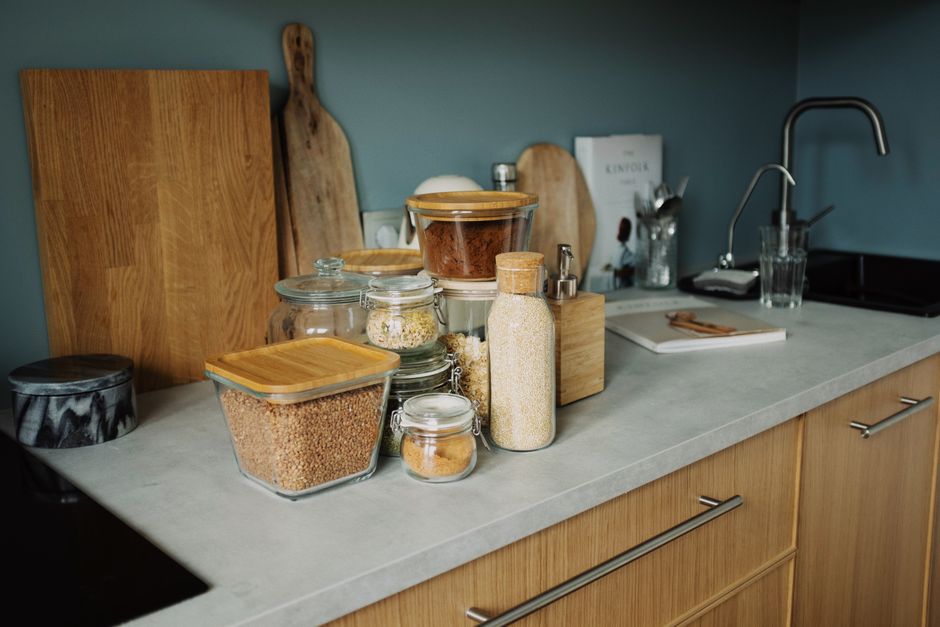
A pantry can look impressively full and still make dinner harder. The problem is rarely a lack of ingredients. More often, useful staples are hidden behind duplicates, half-empty packets and things bought for a recipe that never returned.
The most practical shelf is not the largest one. It is the shelf you can understand at a glance.
Start with the foods that already appear in your week
Instead of building a pantry around an ideal version of how you might cook, begin with what you actually reach for. A dependable shelf might hold rice or another grain, pasta, lentils or beans, tomatoes, oats, flour, a few nuts, and the seasonings that regularly turn those ingredients into meals.
That list should be personal. Someone who cooks a lot of noodles needs different backups from someone who makes soups twice a week. The point is not completeness; it is continuity.
- Keep one open packet visible. Refill only when it is nearly finished.
- Group by use, not by package shape. Baking ingredients together are easier to understand than a row arranged only by height.
- Leave some empty space. A shelf with breathing room is easier to read and easier to clean.
Clear jars are useful when they genuinely simplify storage, especially for ingredients bought in paper bags. They are less useful when decanting turns into another chore. A clipped packet with a readable label can be just as practical.
The quiet advantage of a short inventory
When the same small group of staples stays in rotation, shopping becomes lighter. You know what “running low” looks like. You notice the jar of lentils before it is empty, and you stop buying a third packet of something you already own.
A short inventory also encourages flexible cooking. A grain, a bean, a vegetable, something sharp, and something rich can become many dinners without needing a detailed plan. Pantry food works best when it supports fresh ingredients rather than competing with them.
Every few months, take everything off the shelf and wipe it down. Put back what you use first. Move neglected ingredients to the front and decide whether they belong in an upcoming meal. This small reset is usually enough; there is no need to turn a cupboard into a catalog.
The result is modest but noticeable. Opening the pantry becomes a prompt rather than a puzzle, and the shelf begins to reflect the way you really cook.